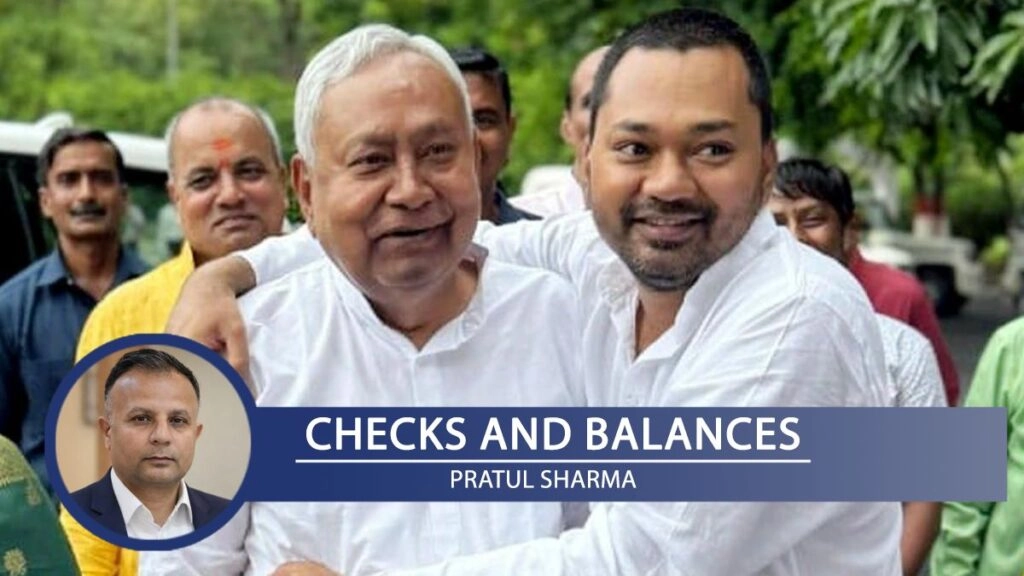
Nishant Kumar’s ‘Sadbhav Yatra’ has sparked significant discussion regarding the potential political transition of the Janata Dal (United) or JD(U). This initiative, which translates to the “Journey of Harmony,” is not just a symbolic event, but rather, it represents a strategic maneuver aimed at reshaping the party’s image and reconnecting with the grassroots. As the JD(U) navigates the evolving political landscape in India, the ‘Sadbhav Yatra’ could serve as a pivotal moment, signaling a shift in its approach and outreach to the electorate.
Kumar, a prominent figure within the party, is leveraging this yatra to promote unity and inclusiveness, themes that resonate deeply with the current socio-political climate. By undertaking this journey, he aims to address pressing issues faced by communities across Bihar and beyond. The initiative is positioned as a means of fostering dialogue among diverse groups, thereby reinforcing the party’s commitment to social justice and equitable development. It reflects JD(U)’s attempt to re-establish itself as a party that prioritizes the voices of the marginalized and seeks to bridge divides within society.
The success of the ‘Sadbhav Yatra’ could have far-reaching implications for the JD(U), especially as it prepares for upcoming electoral challenges. Observers are keenly watching how this endeavor might influence the party’s electoral strategy and its ability to galvanize support ahead of critical elections. If successful, it could not only enhance Kumar’s standing within the party but also help the JD(U) regain its foothold in a competitive political arena, where alliances and voter sentiments are increasingly fluid. Ultimately, this journey may well be the catalyst for a broader transformation within the party, redefining its narrative and engagement with the public in a rapidly changing political scenario.