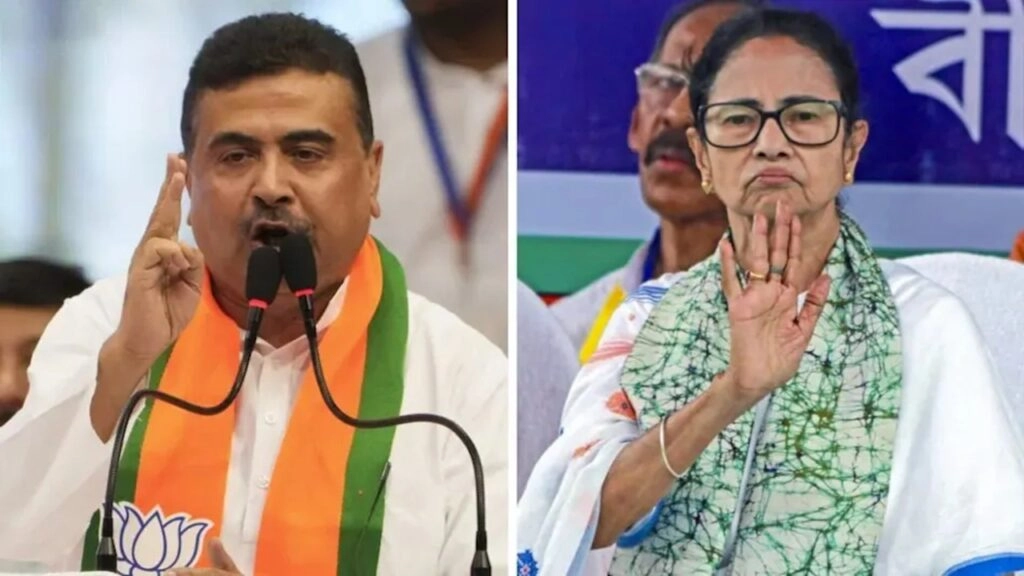
The political landscape of West Bengal has become increasingly contentious, particularly with the contrasting slogans of ‘Jai Shri Ram’ and ‘Jai Bangla’ emerging as symbols of the ongoing electoral battle. As the state gears up for voting, these phrases have transcended mere slogans, reflecting the deeper ideological divide between the ruling party, the Trinamool Congress (TMC) led by Chief Minister Mamata Banerjee, and the opposition, primarily represented by the Bharatiya Janata Party (BJP). The BJP has adopted ‘Jai Shri Ram’ as a rallying cry, aiming to resonate with Hindu sentiments, while the TMC counters with ‘Jai Bangla,’ emphasizing regional pride and identity.
The situation intensified following a visit by Shubhendu Adhikari, a significant BJP leader, to Mamata Banerjee’s constituency. This visit was shrouded in controversy, as it was perceived as a direct challenge to Banerjee’s political stronghold. Adhikari’s presence in the area sparked debates among party supporters and local residents, with both sides exhibiting heightened emotions and fervor. The visit underscored the BJP’s strategy to penetrate regions traditionally dominated by the TMC, aiming to sway public opinion and galvanize support ahead of the elections.
This clash of ideologies not only highlights the rivalry between the two major political factions but also reflects the broader socio-political dynamics in West Bengal. The interplay of religious and regional identities has become a pivotal factor in shaping electoral outcomes. As the parties prepare for the impending vote, the significance of these slogans and the implications of high-profile visits like that of Shubhendu Adhikari cannot be understated. They serve as a microcosm of the larger struggle for power in the state, where every rally, slogan, and campaign strategy is meticulously crafted to capture the hearts and minds of voters.