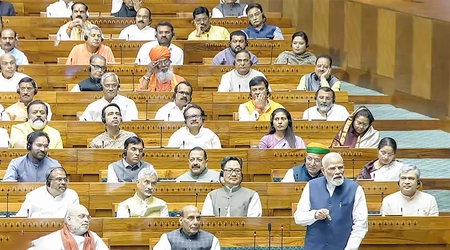
Prime Minister Narendra Modi has extended an interesting offer to the opposition regarding the Women’s Reservation Bill, suggesting that they can take full credit for its passage. This proposal came during a recent parliamentary session where the Prime Minister emphasized the importance of empowering women through legislative measures. By offering a “blank check” to the opposition, Modi aimed to foster a sense of collaboration and shared responsibility in advancing women’s rights and representation in politics.
The Women’s Reservation Bill seeks to reserve a significant percentage of seats for women in the Lok Sabha and state assemblies, a move that has been long-awaited and widely discussed in political circles. Modi’s invitation to the opposition to claim credit for the bill indicates his recognition of the need for bipartisan support to make meaningful progress in this area. He believes that the bill’s passage would not only enhance women’s participation in governance but also inspire future generations of women leaders.
Moreover, the Prime Minister’s statement reflects a broader strategy to engage with opposition parties, encouraging them to participate actively in the legislative process rather than merely criticizing the government. By framing the discussion around the empowerment of women, Modi is attempting to shift the narrative from partisan politics to a more constructive dialogue focused on social issues. This approach could potentially pave the way for more collaborative efforts in the future, especially on issues that require consensus across party lines.
In essence, Modi’s offer is more than just a political maneuver; it is an invitation to unite in the cause of women’s empowerment. As the political landscape evolves, such gestures could play a crucial role in bridging divides and fostering a more inclusive political environment. The success of the Women’s Reservation Bill could set a precedent for other key reforms aimed at enhancing social equity, making this a significant moment in India’s legislative history.