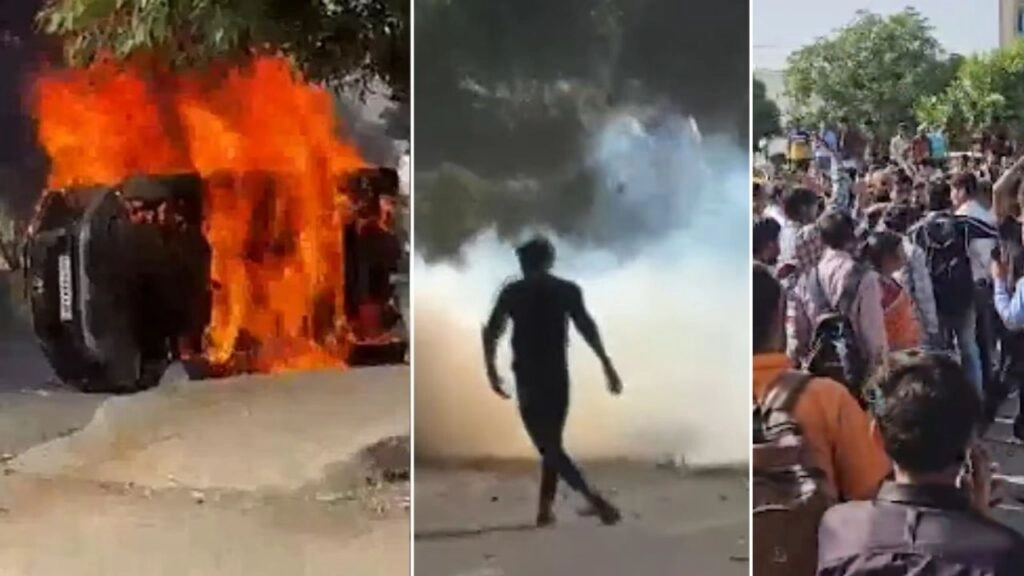
In Noida’s Sector 60, a significant protest erupted recently, stemming from a dispute over salary increases. The situation escalated quickly, leading to incidents of arson and vandalism as frustrated workers took to the streets to voice their demands. The unrest was ignited by a growing discontent among employees who felt that their compensation did not align with their workload and the rising cost of living. As tensions flared, a large crowd gathered, calling for immediate action from their employers to address their grievances regarding wages.
The protest turned violent as demonstrators began to vandalize property and set fires, expressing their anger and frustration. Eyewitness accounts describe chaotic scenes, with police forces attempting to control the situation, but the sheer number of protesters made it challenging to restore order. The unrest highlighted the deep-rooted issues within the labor market in the region, where many workers are struggling to make ends meet despite their hard work. The demand for fair wages has become a rallying point, with workers insisting that they deserve better compensation for their efforts.
Local authorities have been urged to intervene and facilitate discussions between the workers and their employers to find a resolution to the wage dispute. The incident in Noida is not isolated; it reflects a broader trend seen in various sectors across India, where workers are increasingly vocal about their rights and seeking appropriate remuneration for their labor. The outcome of this protest could set a precedent for similar movements in the future, as the workforce becomes more organized and aware of their entitlements. With many workers standing united, the call for justice and fair pay is resonating louder than ever, indicating a shift towards greater labor rights activism in the region.