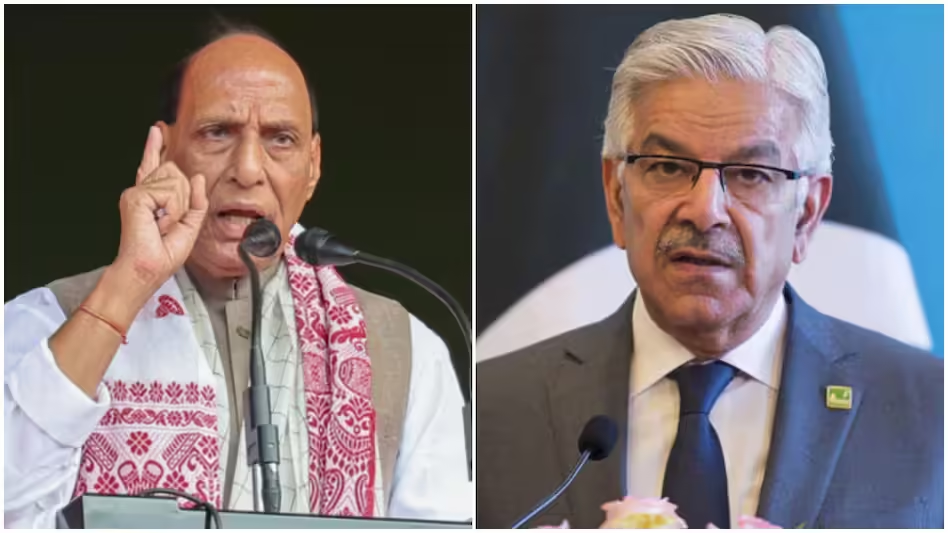
Rajnath Singh recently brought back memories of ‘Operation Sindoor,’ a significant military operation that took place in the past. This reference seemed to aggravate Khawaja Asif, the defense minister of Pakistan. The operation, which involved strategic military actions, has often been a point of contention in the political and military discourse between India and Pakistan. Singh’s mention of it likely served as a reminder of India’s military capabilities and its readiness to respond to threats, a sentiment that can evoke strong reactions from Pakistani officials.
In response, Khawaja Asif expressed his displeasure, reflecting the ongoing tensions between the two nations. His reaction underscores the fragile state of relations, where any reference to military actions can trigger defensive posturing. Pakistan has a history of issuing threats regarding military responses, often seen as an attempt to assert its position in the face of perceived aggression from India. However, these threats are often described as hollow, lacking the substantial backing needed for serious military engagement.
The exchange highlights the broader context of Indo-Pak relations, marked by a cycle of provocation and reaction. Both nations have experienced their share of conflicts, and military operations are a sensitive topic that can quickly escalate into heated rhetoric. As regional dynamics shift and global politics evolve, the need for dialogue and de-escalation becomes ever more critical. The international community watches closely, as any misstep could lead to significant consequences for both countries and the broader region. Thus, leaders from both sides must navigate these discussions with care, seeking to avoid unnecessary conflict while addressing their national interests.