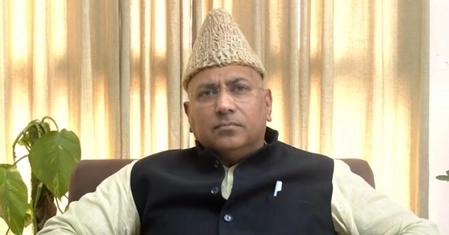
Mamata Banerjee, the Chief Minister of West Bengal, is reportedly feeling anxious about the possibility of losing power in the upcoming elections. This anxiety echoes the political climate in Bihar, where there have been significant shifts in power dynamics. Gulam Ali Khatana, a prominent political figure, has expressed confidence that West Bengal will witness the formation of a ‘double engine’ government, similar to what has been observed in Bihar. A ‘double engine’ government refers to a scenario where both the state and central governments are led by the same political party, which often results in more streamlined governance and policy implementation.
The growing apprehension among leaders like Mamata Banerjee stems from various factors, including changing voter sentiments and the performance of the current administration. In recent times, the political landscape in West Bengal has seen increased competition, with opposition parties gaining momentum. This shift in political dynamics has led to speculations about the potential outcomes of the forthcoming elections, with many predicting a significant change in power.
Khatana’s assertion about the likelihood of a ‘double engine’ government in West Bengal reinforces the belief that the ruling party at the center will play a crucial role in influencing state elections. As political strategies unfold, the focus will be on how parties adapt to the evolving public sentiment and the effectiveness of their campaign efforts. The upcoming elections are poised to be a critical juncture for West Bengal, as the stakes are high and the future governance model of the state hangs in the balance.