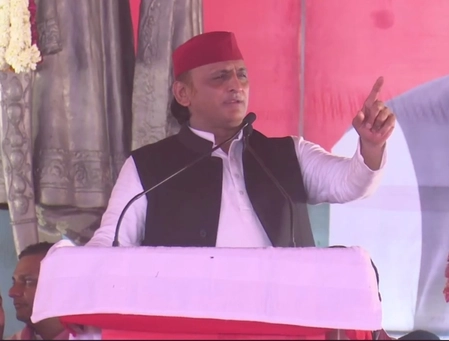
Akhilesh Yadav has raised concerns regarding the recent rally held by Prime Minister Modi, claiming that it was necessary for the government to rely on its employees and resources to gather a crowd. This statement reflects a growing apprehension among opposition leaders about the government’s strategies for mobilizing public support. Yadav’s remarks suggest that the turnout at the rally may not have been entirely organic, indicating a reliance on state machinery to bolster attendance figures.
The use of government personnel and resources for political events has long been a contentious issue in Indian politics. Critics argue that such practices undermine the democratic process, as they blur the lines between state responsibilities and political campaigning. By highlighting this issue, Yadav aims to question the authenticity of the support that the Prime Minister claims to have, suggesting that it may be artificially inflated through state intervention.
Furthermore, this situation raises broader questions about the relationship between government institutions and political parties in India. The expectation that public servants should mobilize citizens for political events could lead to a culture where state resources are routinely exploited for electoral gains. Such practices can erode public trust in governmental institutions, as citizens may begin to perceive them as tools for political advantage rather than impartial bodies serving the public interest.
In the context of a vibrant democracy, it is essential for political gatherings to reflect genuine public sentiment rather than orchestrated displays of support. As the political landscape continues to evolve, the challenge for leaders will be to ensure that their rallies and movements resonate authentically with the electorate, rather than relying on state-sponsored efforts to create an illusion of widespread backing.