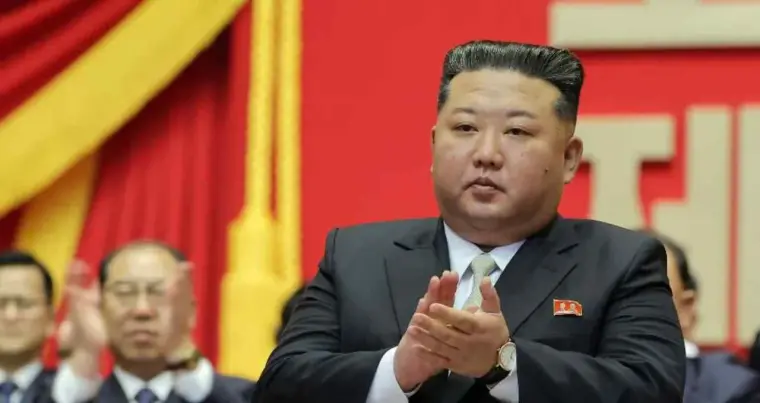
In the 2026 elections in North Korea, the ruling Workers’ Party, led by Kim Jong-un, achieved a sweeping victory, securing all available seats in the Supreme People’s Assembly. This outcome was anticipated, given the tightly controlled political environment in the country, where opposition parties are effectively non-existent, and the electoral process is heavily orchestrated by the state. The elections are characterized by a lack of genuine competition, as candidates are typically handpicked by the party, ensuring that only loyal supporters of the regime are allowed to participate.
The Supreme People’s Assembly, although often regarded as a rubber-stamp institution, plays a crucial role in endorsing the policies and directives set forth by Kim and his inner circle. With this latest electoral victory, Kim solidifies his grip on power and reinforces the legitimacy of his leadership, both domestically and internationally. The elections serve as a means for the regime to project an image of stability and unity, particularly in the face of ongoing economic challenges and international sanctions that have plagued the nation.
Observers note that the electoral process in North Korea is largely ceremonial, as the outcomes are predetermined. Voter turnout is reported to be exceptionally high, often reaching near 100%, which raises questions about the authenticity of the participation. The regime uses these elections to showcase its strength and the supposed support of the populace for Kim’s policies. As North Korea continues to navigate a complex web of geopolitical tensions, the consolidation of power through such elections remains a key strategy for the regime to maintain control and deter dissent. Ultimately, the 2026 elections reaffirm the status quo in North Korea, where the Workers’ Party remains unchallenged and Kim Jong-un’s authority goes unopposed.