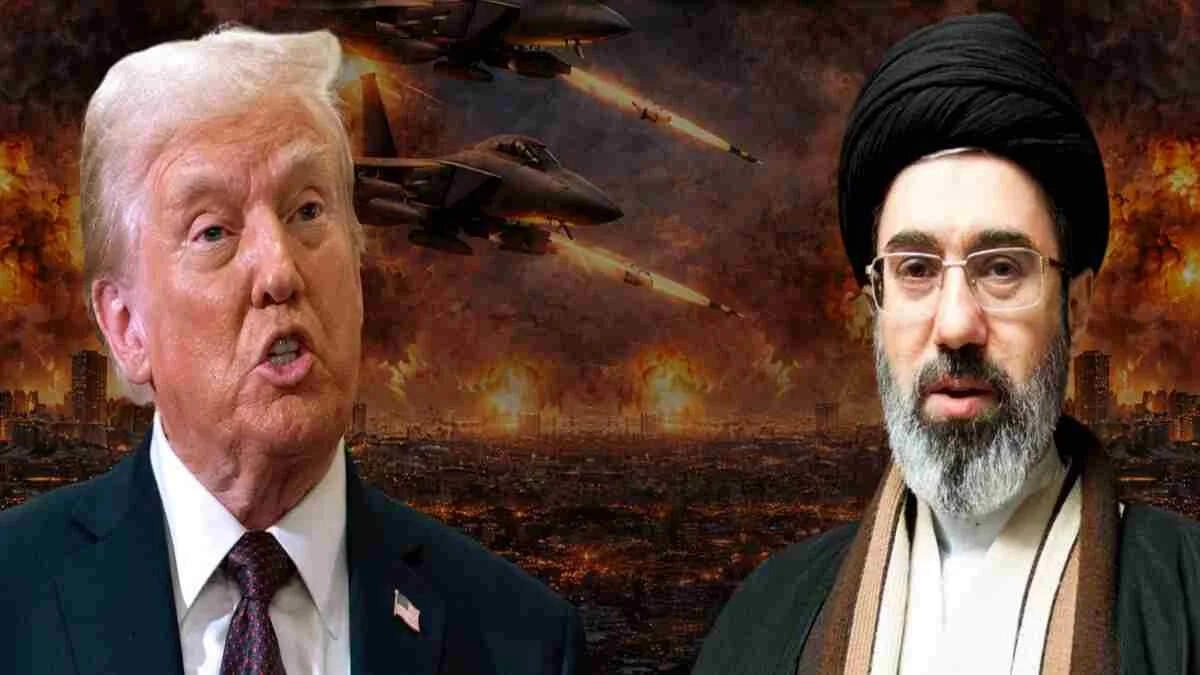
Mojtaba Khamenei, a prominent figure in Iran, has firmly rejected the proposal for a ceasefire, signaling a strong intention to continue military actions. His statement, “Not peace, there will be war now,” reflects a resolute stance against external pressures, particularly from the United States and Israel. This declaration indicates that Iran is prepared to escalate its military operations rather than pursue diplomatic solutions. Khamenei’s comments highlight a broader strategy to teach a lesson to the U.S. and Israel, emphasizing Iran’s commitment to its regional ambitions and its unwillingness to back down in the face of perceived threats.
The rejection of a ceasefire proposal underscores the ongoing tensions in the Middle East, where Iran’s military posture continues to be a significant concern for both American and Israeli interests. Khamenei’s rhetoric suggests that Iran is not only prepared for conflict but also sees it as a means to assert its influence and power in the region. This determination to engage in warfare rather than dialogue raises alarms about the potential for increased hostilities and the ramifications for regional stability.
Furthermore, Khamenei’s position reflects a broader sentiment within Iranian leadership that prioritizes resistance against foreign intervention and aligns with the ideological foundations of the Islamic Republic. The statement can be interpreted as a rallying call to consolidate internal support and unify various factions within Iran, reinforcing the narrative of standing firm against external adversaries. The implications of this stance extend beyond Iran, as it may provoke a range of responses from both the U.S. and Israel, potentially escalating military tensions further in an already volatile region.
In essence, Khamenei’s dismissal of the ceasefire proposal signifies a pivotal moment in the ongoing geopolitical dynamics of the Middle East. It embodies Iran’s readiness to confront its adversaries directly, pursuing a path of confrontation rather than reconciliation. The international community must closely monitor these developments, as they could lead to significant shifts in power balances and pose challenges to peace efforts in the region.