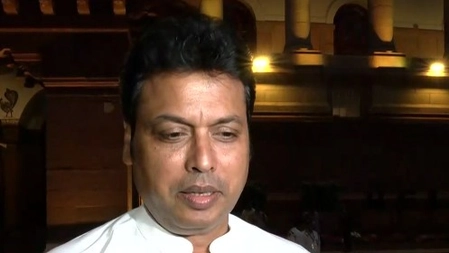
Biplab Kumar Deb, a prominent political figure, has made a bold statement regarding West Bengal’s Chief Minister Mamata Banerjee, labeling her as the “biggest enemy of Muslims.” This assertion reflects the ongoing political tensions in the region, particularly in the context of communal relations and the electoral landscape. Deb’s remarks suggest a deeper narrative about the dynamics between political leadership and religious communities, emphasizing how political rhetoric can influence public perception and societal harmony.
In recent years, the relationship between different religious groups and political parties has become increasingly complex in India, with leaders often taking stances that resonate with their respective voter bases. Deb’s comments may be seen as an attempt to galvanize support among certain segments of the population who may feel marginalized or threatened by current governance. By positioning Mamata Banerjee as an adversary to Muslims, Deb is not only critiquing her policies but also appealing to a communal sentiment that can mobilize voters during elections.
The implications of such statements are significant, as they can exacerbate divisions within society and lead to heightened tensions among different religious communities. Political leaders hold the responsibility to foster unity and understanding, yet remarks like those made by Deb can contribute to an atmosphere of distrust and conflict. As the political landscape evolves, the impact of these narratives will be crucial in shaping future interactions among communities and the overall political climate in West Bengal and beyond.
In essence, Deb’s declaration against Mamata Banerjee serves as a stark reminder of the power of political discourse in influencing societal relations. It raises important questions about the role of leaders in promoting inclusivity and the potential consequences of divisive rhetoric in a diverse nation like India.