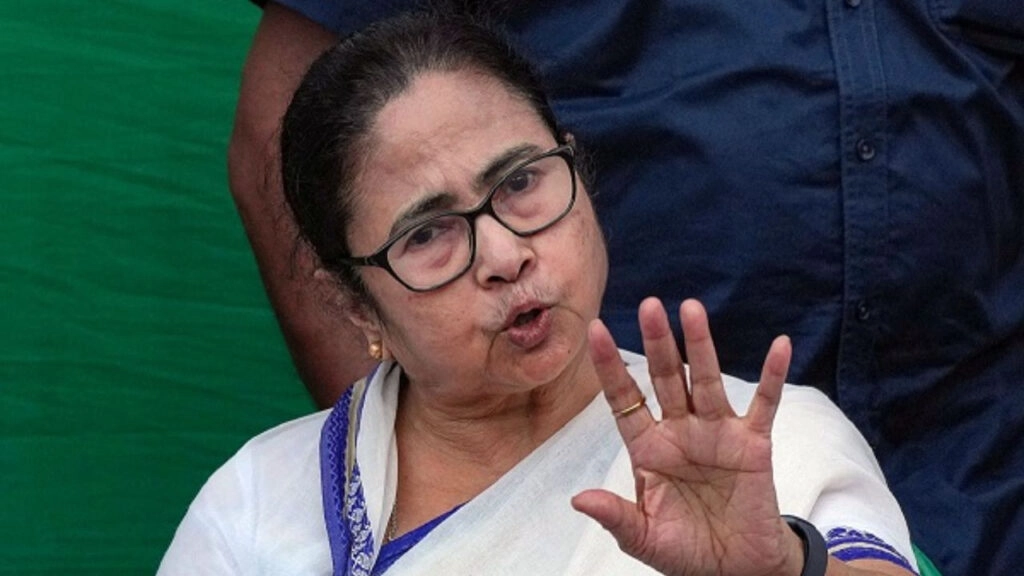
West Bengal Chief Minister Mamata Banerjee has launched a significant counterattack in response to a statement made by President Draupadi Murmu. During her remarks, Banerjee asserted that the President is ensnared in the agenda of the Bharatiya Janata Party (BJP). This assertion reflects the ongoing political tensions between the ruling party in West Bengal and the central government, led by the BJP. Banerjee’s comments come in the wake of various political developments and discussions that have raised questions about the independence of constitutional offices and their alignment with party politics.
In her response, Banerjee emphasized that the President’s statements should reflect the interests of the nation and its diverse populace rather than being influenced by party politics. She expressed concern that the President, as a constitutional authority, should maintain an impartial stance and promote unity among the different sections of society. Banerjee’s remarks highlight her ongoing critique of the BJP, which she accuses of using political power to manipulate and control key institutions, including the presidency.
The Chief Minister’s counterattack underscores the broader context of political rivalry in India, where regional leaders often find themselves at odds with central authorities. Banerjee’s comments resonate with her party’s strategy to position itself as a defender of state rights and a champion of regional identity against what they perceive as the encroachment of central power. As the political landscape continues to evolve, these exchanges between leaders will likely shape the discourse leading up to future elections, particularly in West Bengal, where Banerjee’s Trinamool Congress has been a formidable opponent to the BJP’s ambitions.