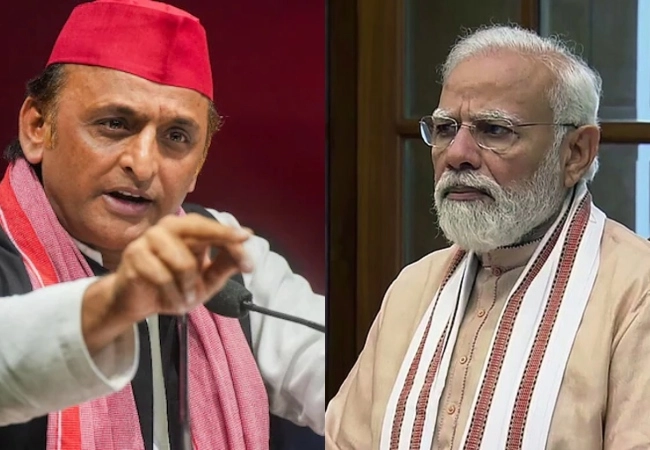
Akhilesh Yadav, the leader of the Samajwadi Party, has made a striking statement regarding the political situation in Bihar, alleging that the Bharatiya Janata Party (BJP) is effectively holding the state hostage. He characterized this situation as “the biggest kidnapping in the history of Bihar.” Yadav’s comments suggest a deep frustration with what he perceives as the BJP’s monopolistic hold over political power in the region, implying that the party is demanding complete control and influence over the state’s governance in a manner akin to a ransom demand.
The analogy of kidnapping is particularly powerful and evocative, as it implies coercion and a lack of consent from the people of Bihar. Yadav’s comments reflect a broader sentiment among opposition parties that accuse the BJP of undermining democratic processes and subverting the will of the electorate. This metaphor of ransom not only highlights the tension between the ruling party and the opposition but also seeks to resonate with the public’s sense of justice and fairness in governance.
Furthermore, Yadav’s remarks could be seen as a rallying cry for the opposition to unite against what he describes as authoritarian tendencies within the BJP. By framing the situation in such dramatic terms, he aims to galvanize supporters and draw attention to what he views as a critical issue facing the state. The implications of these statements extend beyond mere political rhetoric; they underline the complex dynamics at play in Bihar’s political landscape, where power struggles are often intense and deeply consequential for the state’s future.
In conclusion, Yadav’s assertion about the BJP’s alleged ransom demand captures the heightened political tensions in Bihar. It serves as a reminder of the ongoing challenges faced by opposition parties in their efforts to counteract the dominance of the ruling party. As the political landscape continues to evolve, such statements will likely play a significant role in shaping public discourse and influencing voter sentiment in the lead-up to future elections.