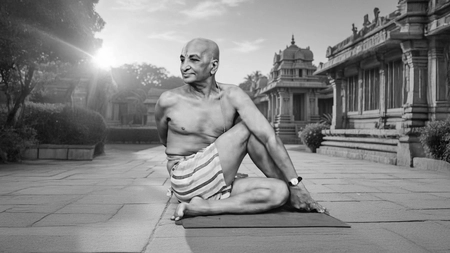
Tirumalai Krishnamacharya, often hailed as the “father of modern yoga,” passed away on this day, leaving behind a legacy that continues to influence the practice of yoga around the world. Born in India in 1888, Krishnamacharya was a pioneering yogi, scholar, and teacher who played a crucial role in reviving and popularizing yoga in the 20th century. His approach to yoga was not just about physical postures; it integrated elements of philosophy, breathing techniques, and meditation, making it a holistic practice that resonated with many.
Krishnamacharya’s teaching methodology was innovative and personalized, catering to the individual needs of his students. He trained numerous influential figures in yoga, including B.K.S. Iyengar, Pattabhi Jois, and T.K.V. Desikachar, who further disseminated his teachings globally. His emphasis on adapting yoga practices to suit the unique physical and mental conditions of each practitioner helped to demystify yoga and make it accessible to a broader audience.
The impact of Krishnamacharya’s teachings can be felt in various styles of yoga practiced today, including Hatha, Ashtanga, and Vinyasa. His work has not only transformed the landscape of yoga in India but has also contributed significantly to its acceptance and popularity in the West. As more people seek wellness and mindfulness, Krishnamacharya’s legacy continues to inspire new generations of yogis and practitioners, ensuring that his vision of yoga as a means to promote health and well-being endures. His passing marks a moment of reflection on his contributions to this ancient practice, which remains relevant in contemporary society.