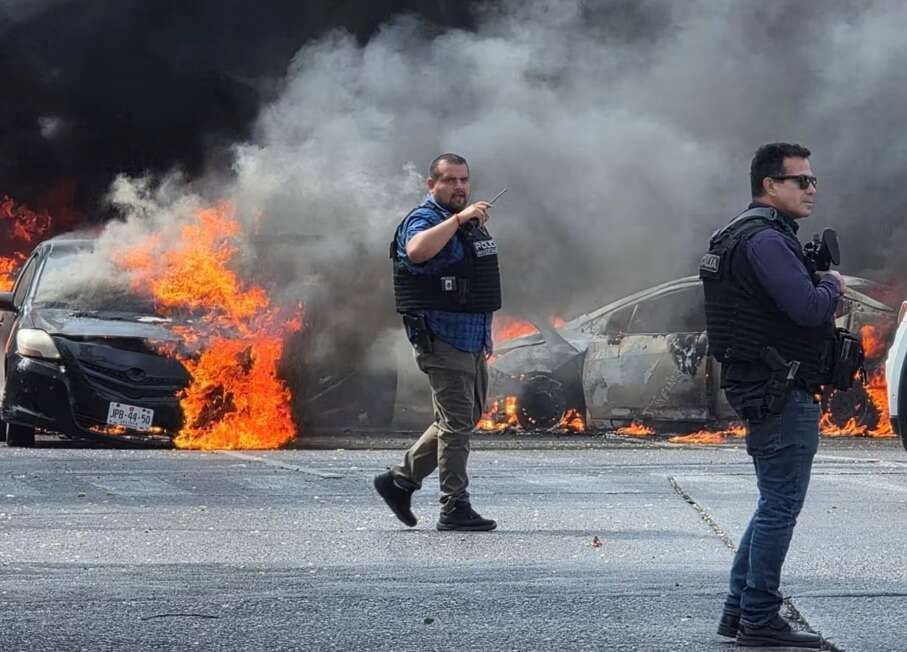
The death of drug lord El Mancho has ignited widespread violence across Mexico, leaving the nation in turmoil. Following his demise, 20 states have witnessed incidents of arson and gunfire, leading to a tragic toll of 25 law enforcement officers killed and a total of 32 fatalities overall. The chaos has not only affected the streets but has also turned banks into prime targets for looting and vandalism, as criminal groups seek to assert their dominance in the vacuum left by El Mancho’s passing.
In the wake of El Mancho’s death, the response from various criminal factions has been swift and brutal, with increased clashes between rival gangs and law enforcement agencies. This surge in violence underscores the power struggle that often follows the removal of a major criminal figure. Authorities are on high alert, attempting to contain the unrest and prevent further loss of life, but the situation remains volatile. The fear among citizens is palpable, with many apprehensive about the potential for further escalation in violence.
As the country grapples with this crisis, it raises questions about the effectiveness of the government’s strategies in combating organized crime. El Mancho’s influence had already permeated various regions, and his death has only exacerbated the existing problems of lawlessness and insecurity. The Mexican government faces significant challenges as it seeks to restore order while addressing the underlying issues that allow such criminal enterprises to flourish. The current environment serves as a stark reminder of the ongoing battle against drug cartels and the collateral damage inflicted upon innocent lives in the process.