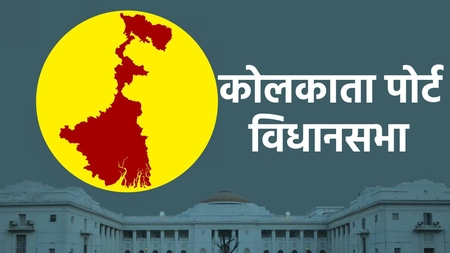
Kolkata Port, a significant hub in the city, has witnessed transformative changes in its political landscape over the years. Following the delimitation process, the dynamics of politics in this area have shifted considerably. The once-dominant Left parties and the Indian National Congress, which had a stronghold in the region, have struggled to regain their influence for the past two decades. This ongoing political evolution reflects broader trends in West Bengal, where the rise of the Trinamool Congress (TMC) has reshaped the electoral map.
The delimitation, which involved redrawing the boundaries of electoral constituencies, has had profound implications for political representation. It has not only altered the demographics of voters but has also affected the strategies of political parties. The Left and Congress, which historically had a strong base in Kolkata Port, have found it increasingly difficult to connect with the electorate in the face of changing aspirations and priorities. The TMC, leveraging its grassroots presence and charismatic leadership, has effectively capitalized on these shifts, thereby marginalizing its rivals.
In this context, the political landscape of Kolkata Port serves as a microcosm of the larger ideological battles in West Bengal. As the TMC continues to consolidate its power, the Left and Congress face the daunting challenge of reinventing their political narratives to resonate with a new generation of voters. The struggle for relevance in this evolving scenario highlights the complexities of Indian politics, where historical legacies often collide with contemporary realities. The inability of the Left and Congress to make a comeback underscores the unpredictable nature of electoral politics, where past dominance does not guarantee future success.
Ultimately, Kolkata Port stands as a testament to the shifting tides of political allegiance in India. The region’s experience in the last two decades raises questions about the sustainability of political ideologies and the adaptability of parties in an ever-changing electoral landscape. As new issues emerge and voter sentiments evolve, the future of political engagement in Kolkata Port and beyond remains uncertain, prompting ongoing debates about strategy, identity, and the essence of democratic representation in the country.