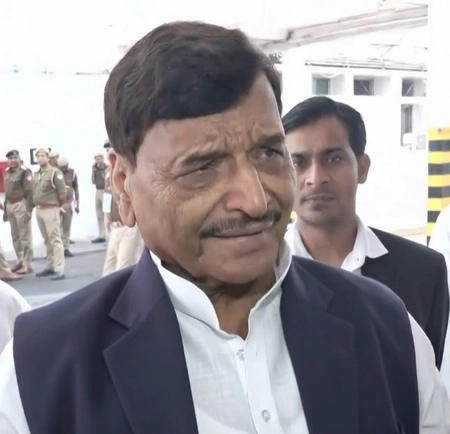
In Uttar Pradesh, the decision to restrict the use of loudspeakers during Ramadan has sparked significant controversy, particularly from the Samajwadi Party (SP), which has labeled the move as erroneous. The SP’s leadership argues that such restrictions not only infringe upon the rights of the Muslim community to observe their religious practices but also reflect a broader trend of marginalization faced by minority groups in the state. Ramadan, a holy month for Muslims characterized by fasting, prayers, and community gatherings, often involves the use of loudspeakers for calls to prayer and religious announcements. The party contends that the government’s decision undermines the spirit of religious freedom and tolerance that is essential in a diverse society like India.
Additionally, the controversy surrounding the Shankaracharya has further fueled the debate on religious freedoms and the role of government in regulating religious practices. Critics of the government argue that the administration is selectively imposing restrictions that disproportionately affect certain communities. The Shankaracharya, a revered spiritual leader in Hinduism, has been embroiled in a dispute that has raised questions about the intersection of religion and politics in Uttar Pradesh. The Samajwadi Party has seized upon this issue to highlight what they perceive as a pattern of actions that seek to undermine the pluralistic fabric of Indian society.
The SP’s opposition to the loudspeaker ban during Ramadan is not merely a political maneuver but reflects deeper concerns about social cohesion and the need for mutual respect among different religious communities. They emphasize that the government should focus on fostering an environment of inclusivity rather than division. By questioning the rationale behind such restrictions, the SP aims to initiate a broader dialogue on religious rights, tolerance, and the responsibilities of the state in safeguarding these fundamental freedoms for all citizens, regardless of their faith. The ongoing discussions surrounding these issues are critical to understanding the dynamics of religious expression and the importance of upholding democratic values in a diverse nation like India.