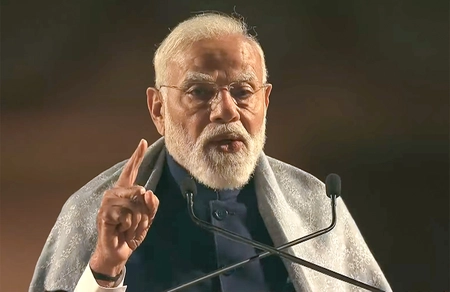
Prime Minister Narendra Modi recently emphasized that the transformative moment in the history of artificial intelligence (AI) is poised to significantly enhance human capabilities. He highlighted that AI is not merely a technological advancement but a revolutionary tool that can augment our potential and lead to unprecedented progress in various fields. This shift towards integrating AI into our daily lives and industries marks a pivotal point that could redefine how we approach problem-solving and innovation.
During his address, PM Modi pointed out the immense possibilities that AI presents for sectors such as healthcare, education, and agriculture. By leveraging AI, we can streamline processes, improve efficiency, and create personalized experiences that cater to individual needs. For instance, in healthcare, AI can assist in diagnosis and treatment planning, thereby improving patient outcomes. In education, it can provide tailored learning experiences that cater to the diverse needs of students, making education more accessible and effective.
Moreover, the Prime Minister underscored the importance of responsible AI development, stressing that while the benefits of AI are vast, it is crucial to ensure ethical considerations guide its deployment. This includes addressing issues related to privacy, security, and the potential for job displacement. As we stand on the brink of this AI revolution, Modi urged all stakeholders, including governments, businesses, and researchers, to collaborate in harnessing AI’s potential while safeguarding societal values.
In conclusion, PM Modi’s vision for AI reflects a profound understanding of its capabilities and the responsibilities that come with it. By embracing AI thoughtfully and strategically, we can unlock new avenues for growth and development, ultimately leading to a more prosperous and inclusive future. The journey ahead is filled with opportunities, and it is imperative that we navigate this landscape with foresight and consideration for the broader impact on humanity.