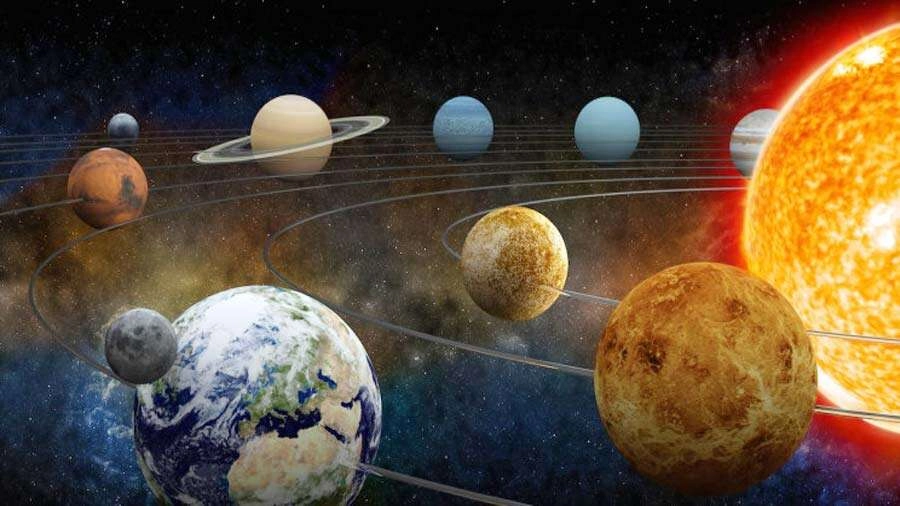
Eclipses, a fascinating astronomical phenomenon, have long captivated humanity’s imagination. While we commonly associate eclipses with Earth, particularly solar and lunar eclipses, recent advancements in space science have shed light on the impact of eclipses on other celestial bodies as well. Scientists have begun to explore how these events affect the atmospheres, climates, and even the geological features of other planets and moons in our solar system.
For instance, during a solar eclipse on Mars, the shadow of a passing moon can create temporary changes in temperature and atmospheric conditions. Studies have shown that these shifts can influence weather patterns and might even affect the potential for dust storms. Similarly, on Jupiter’s moons, eclipses can cause dramatic shifts in thermal emissions, providing valuable data about their geological activities and atmospheric compositions. Such findings not only enhance our understanding of celestial mechanics but also offer insights into the complex interactions within planetary systems.
Moreover, eclipses can serve as natural laboratories for studying the effects of light and shadow on extraterrestrial environments. For example, the study of eclipses on Venus has revealed how its dense atmosphere reacts to sudden changes in solar radiation. This research holds implications not just for our knowledge of Venus but also for understanding the potential habitability of exoplanets orbiting distant stars. By examining how eclipses influence other planets, scientists can refine their models of planetary atmospheres and improve our ability to detect and analyze exoplanets in the search for life beyond Earth.
In summary, while Earth remains the focal point of our eclipse experiences, the effects of these celestial events extend far beyond our planet. Ongoing research into the repercussions of eclipses on other planets and moons enhances our comprehension of the dynamics of the solar system and enriches our quest to understand the universe. As we continue to explore these phenomena, we uncover not just the intricacies of our own solar neighborhood but also the potential for life and the diverse environments that exist beyond our world.