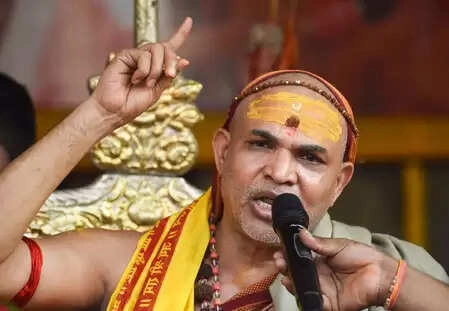
The controversy surrounding ‘Shankaracharya’ has intensified, particularly following comments made by Chief Minister Yogi Adityanath. The Chief Minister’s remarks have elicited a sharp response from Swami Avimukteshwaranand, a prominent figure in the spiritual community. This ongoing debate highlights the complexities of religious leadership and the varying interpretations of ancient philosophies in contemporary society.
Shankaracharya, revered as a pivotal figure in Indian philosophy and spirituality, is often associated with the Advaita Vedanta school of thought. His teachings emphasize the non-duality of the self and the ultimate reality, which has led to various interpretations and sometimes contentious discussions among followers and scholars alike. The recent comments by the Chief Minister have sparked a renewed examination of these ideas and their relevance today.
Swami Avimukteshwaranand has expressed his discontent with the Chief Minister’s remarks, indicating that they may undermine the traditional respect afforded to the position of Shankaracharya. His reaction underscores the importance of maintaining the sanctity of spiritual leadership in a rapidly changing political landscape. As the discourse unfolds, it raises questions about the intersection of politics and spirituality in India, and how leaders navigate these sensitive topics.
This situation serves as a reminder of the powerful role that religious figures play in shaping cultural narratives and the potential implications of political figures engaging with spiritual matters. The ongoing dialogue will likely continue to evolve, reflecting the dynamic nature of faith, authority, and societal values in the country.