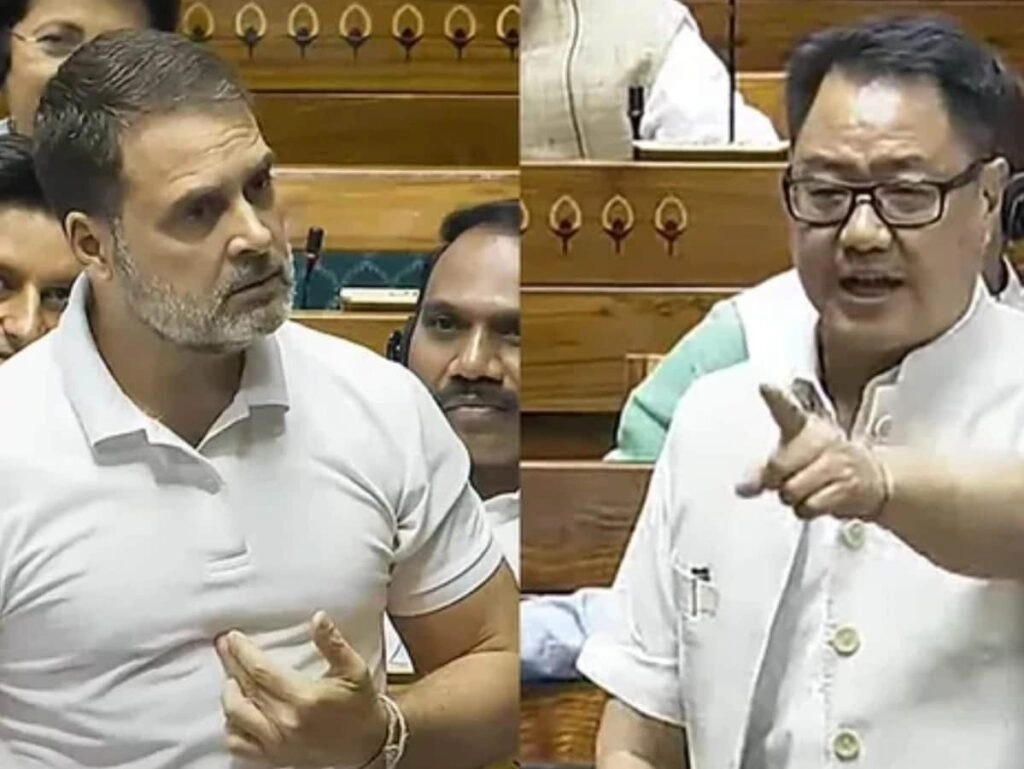
The recent clash between Union Minister Kiren Rijiju and Congress leader Rahul Gandhi over the U.S. trade deal has sparked significant debate and raised questions about the accuracy of the claims made by both parties. This confrontation highlights the importance of separating fact from fiction in political discourse, particularly when it comes to issues that can affect the economy and international relations. Rijiju’s defense of the government’s stance on the trade deal emphasizes the administration’s commitment to ensuring that India’s interests are safeguarded, while Gandhi’s criticisms underscore the potential ramifications of the deal on local industries and labor.
Rijiju argued that the trade agreement would provide India with substantial economic benefits, including increased access to U.S. markets and the potential for job creation in various sectors. He pointed to potential growth in technology and agricultural exports as key components of the deal, suggesting that it could bolster India’s standing in the global economy. On the other hand, Rahul Gandhi expressed concerns about the deal’s implications for small businesses and farmers, arguing that it could lead to unfair competition and undermine local industries. This disagreement reflects a broader tension in Indian politics regarding globalization and its impact on the domestic economy.
As this debate continues, it becomes essential for the public to critically evaluate the claims made by both sides. Misinformation can easily spread in political discussions, and understanding the nuances of trade agreements is crucial for informed decision-making. To navigate this complex issue, citizens must seek out reliable sources and engage in constructive dialogue about the potential benefits and drawbacks of such agreements. Ultimately, the outcome of the Rijiju-Rahul clash may influence not only public opinion but also the future trajectory of India’s trade relations with the United States.