
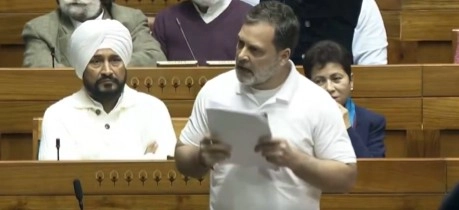
In a recent turn of events in the Lok Sabha, Congress leader Rahul Gandhi has stirred controversy by attempting to reference an unpublished memoir purportedly authored by former Army Chief General Manoj Mukund Naravane. This incident has raised several questions regarding the credibility of using unpublished works as a basis for argument in parliamentary discussions. Gandhi’s intention seems to stem from a desire to bolster his points with insights drawn from military leadership, which he believes could lend weight to his criticisms of the government’s policies and actions.
The mention of Naravane’s memoir, which has not yet been made public, adds a layer of complexity to the discourse in the Lok Sabha. Opposition members have expressed concerns about the validity of citing material that is not accessible to the public or has not undergone the scrutiny that published works typically face. This situation highlights the ongoing struggle among political leaders to navigate the fine line between leveraging authoritative sources and ensuring that their references are credible and transparent.
Moreover, this incident reflects the broader dynamics of Indian politics, where leaders often seek to align themselves with the military establishment to project strength and credibility. The military’s role in national security is a significant topic of discussion, and Gandhi’s attempt to draw on the insights of a former Army Chief indicates his awareness of the importance of military perspectives in political debates. However, the reliance on unpublished works poses challenges, as it raises questions about accountability and the potential for misrepresentation.
As the Lok Sabha session progresses, observers will be keen to see how this situation unfolds and whether it will influence the ongoing political narrative. The use of unpublished sources can be a double-edged sword, as it may either enhance a speaker’s argument or lead to further scrutiny and backlash. For Gandhi, this move could either solidify his position on national security issues or detract from his credibility if the memoir does not provide the necessary support for his claims. Ultimately, this incident serves as a reminder of the complexities inherent in the intersection of politics and military authority in India.


