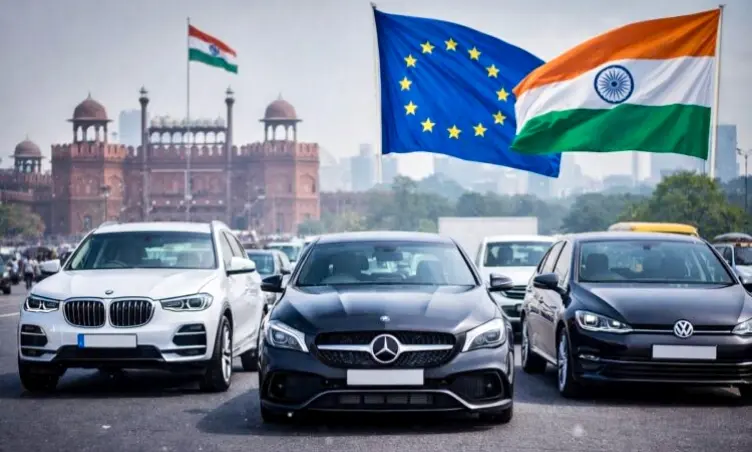
India is set to significantly reduce its tariffs on automobiles, bringing them down to 40% as part of an upcoming trade agreement with the European Union (EU). This move is seen as a pivotal step in enhancing trade relations between India and the EU, which have been strengthening over recent years. The reduction in tariffs is expected to benefit European car manufacturers, making it easier and more cost-effective for them to enter the Indian market. This development comes amid a broader effort by India to attract foreign investment and boost its automotive sector.
The decision to lower tariffs is strategic for India, as it aims to position itself as a global manufacturing hub. By reducing barriers to entry for foreign automakers, the country hopes to encourage technology transfer and innovation in its automotive industry. This could lead to an increase in competition, which might benefit consumers through better quality vehicles and potentially lower prices. Additionally, the Indian government has been focusing on sustainability, and this deal could pave the way for a greater influx of electric vehicles from Europe, aligning with India’s goals of promoting greener transportation.
Negotiations for this trade deal have been ongoing, and the reduction in tariffs on cars is just one aspect of a wider agreement that aims to enhance trade in various sectors. Other industries, such as pharmaceuticals and textiles, are also expected to see changes that could facilitate smoother trade relations. The commitment to lower tariffs reflects a mutual desire to strengthen economic ties and create a more favorable environment for bilateral investments. As both regions work towards finalizing this deal, the implications for the automotive industry could be significant, potentially reshaping the market landscape in India and beyond.
In conclusion, India’s decision to cut car tariffs to 40% in its trade deal with the EU highlights a strategic move aimed at fostering economic growth and enhancing international partnerships. This agreement not only signals a commitment to open trade and investment but also aligns with India’s broader objectives of modernization and sustainability in its automotive sector. As the negotiations progress, stakeholders in both regions will be closely watching the developments, anticipating the positive impact this deal could have on their respective markets.