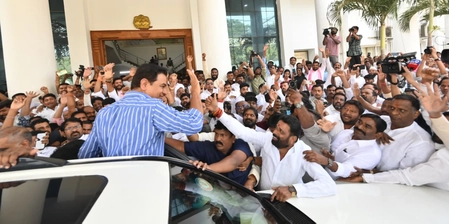
The executive president of the Bharat Rashtra Samithi (BRS), K.T. Rama Rao, recently appeared before the Special Investigation Team (SIT) in connection with the phone-tapping case that has been a subject of significant political controversy. This development marks a crucial moment in the ongoing investigation, which has raised questions about privacy, political ethics, and the use of technology in governance. The allegations surrounding the phone-tapping have generated considerable media attention and public discourse, reflecting the heightened tension within the state’s political landscape.
K.T. Rama Rao, commonly known as KTR, is not only a prominent political figure but also the son of the Chief Minister of Telangana, K. Chandrashekar Rao. His appearance before the SIT underscores the seriousness of the allegations and the importance of transparency in addressing issues of surveillance. The case has implications not only for those directly involved but also for the broader political environment in Telangana, where trust in governmental processes is paramount. As the SIT delves deeper into the investigation, it is expected to uncover critical details regarding the methods and motivations behind the alleged phone-tapping activities.
Moreover, the phone-tapping incident has sparked a larger debate about privacy rights and the ethical boundaries of political power. It raises pertinent questions about how far political entities may go in their pursuit of information and the potential misuse of technology in undermining individual rights. The outcome of this investigation could set significant precedents for future governance and the relationship between technology and politics in India. As KTR navigates this challenging situation, the reactions from various stakeholders, including political opponents and civil society, will be closely monitored, shaping the narrative around this case and its implications for the future of political conduct in the region.