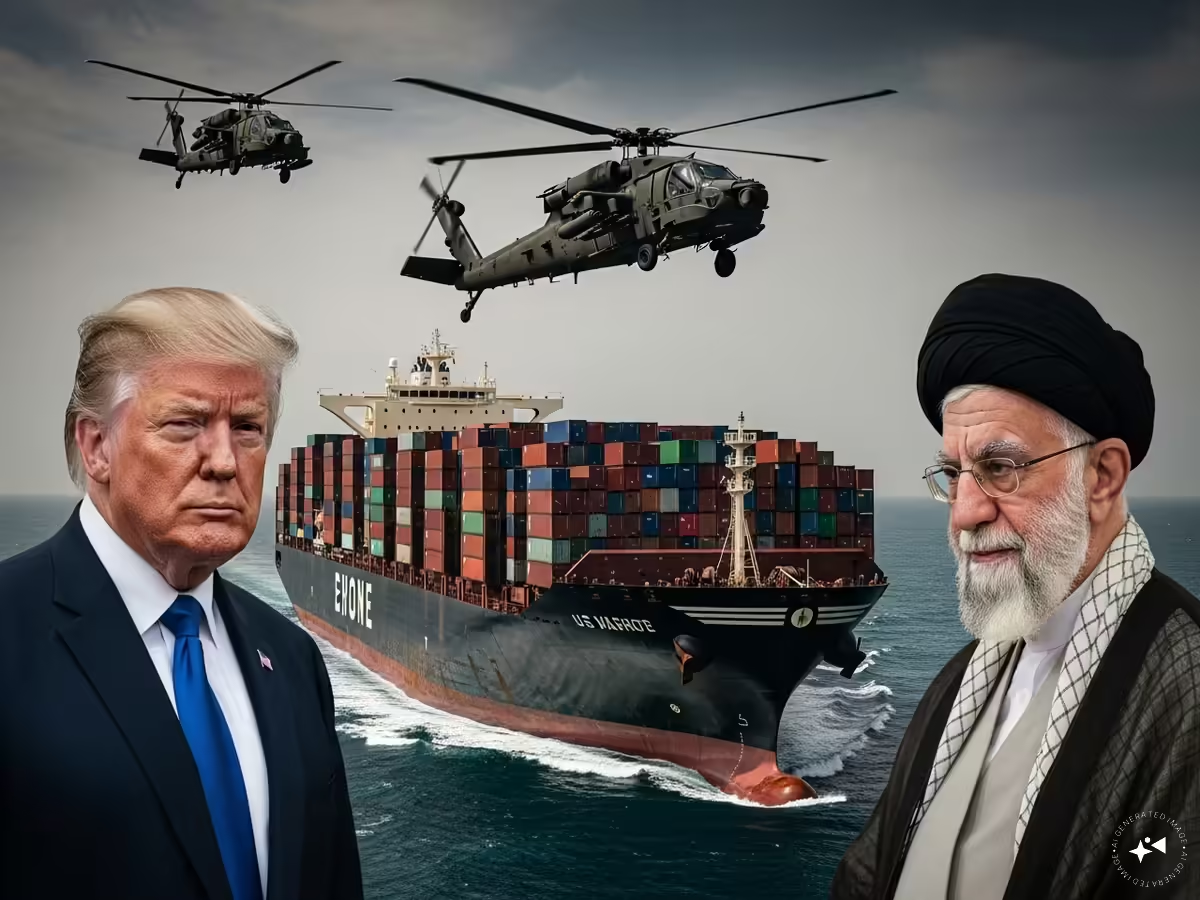
The recent developments between the United States and Iran have sparked significant discussions regarding the potential for conflict between the two nations. The U.S. dispatched warships to the region, which is often seen as a show of military strength and a deterrent against aggressive actions. This move comes amid rising tensions and heightened military presence in the Gulf, raising concerns about a possible confrontation.
On the other hand, Iran has reportedly delayed the execution of Sultan, a high-profile individual, which could be interpreted as a strategic decision to ease tensions temporarily. This act may suggest that Iran is seeking to avoid escalating the situation further, possibly in response to the U.S. military maneuvers. The interplay of such actions reveals a complex diplomatic landscape where both nations are calculating their responses to maintain a delicate balance.
To understand whether a war might erupt between the U.S. and Iran, it’s essential to examine four key points: first, the historical context of their strained relations, which has been marked by sanctions, military interventions, and ideological conflicts. Second, the implications of military posturing, as the presence of U.S. warships may provoke Iran to respond militarily or through asymmetric means. Third, the internal political dynamics within Iran, where leaders may feel pressure to take a hardline stance against perceived external threats. Lastly, the role of international diplomacy and potential mediators who could help de-escalate tensions, emphasizing dialogue over military confrontation.
Ultimately, while the risk of conflict remains, both nations appear to be weighing their options carefully, with a keen awareness of the consequences of war. The situation is fluid, and the decisions made in the coming days will be critical in determining whether the path leads toward further escalation or a renewed focus on diplomatic solutions.