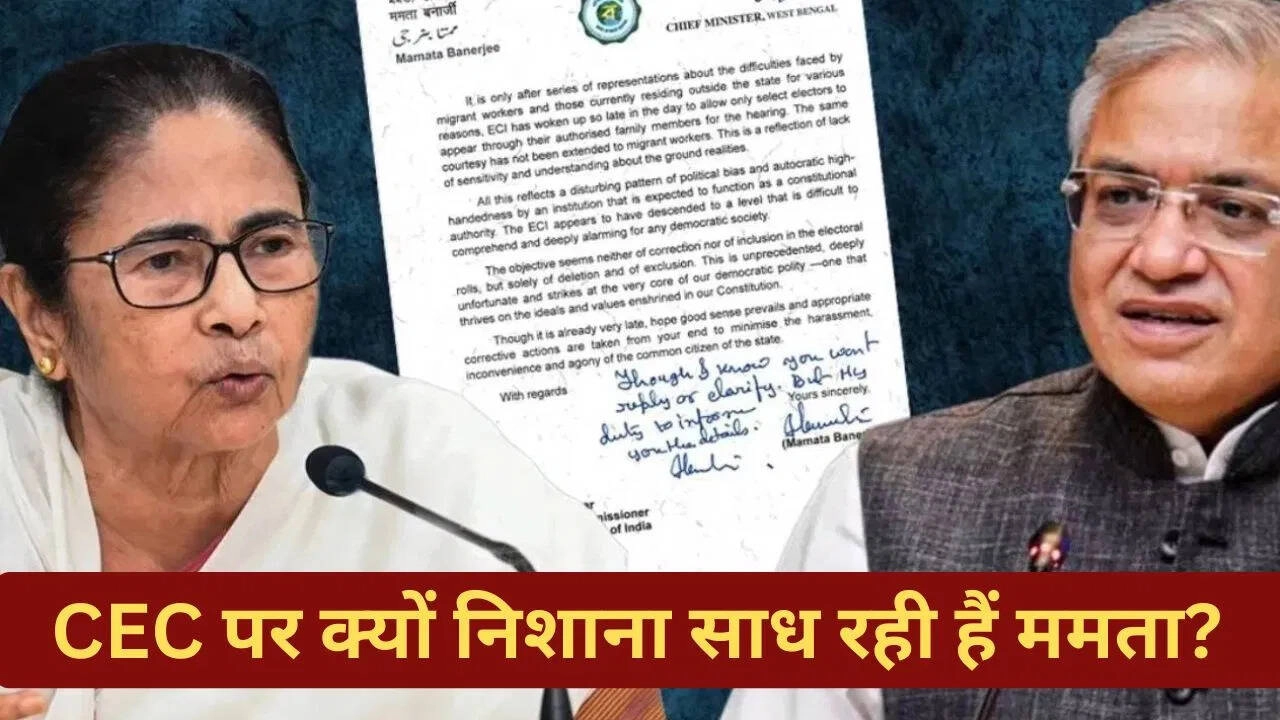
West Bengal Chief Minister Mamata Banerjee has engaged in a significant correspondence battle with the Chief Election Commissioner of India, a situation that is drawing considerable attention in political circles. This “letter war” highlights the ongoing tensions between the state government and the Election Commission, particularly in the context of upcoming elections. The exchange of letters has become a platform for Mamata to express her grievances regarding the conduct and impartiality of the Election Commission, raising questions about its role in ensuring free and fair elections.
The political implications of this conflict are profound. Mamata Banerjee, a prominent leader of the Trinamool Congress, has accused the Election Commission of bias and interference in the state’s political landscape. Such allegations are not new in the realm of Indian politics, especially during election seasons. However, the sharpness of Mamata’s statements reflects her growing frustration with what she perceives as an encroachment on the democratic processes of West Bengal. The Chief Minister’s assertive stance may resonate with her supporters, bolstering her image as a defender of state rights against perceived central overreach.
On the other hand, the Election Commission, tasked with overseeing the electoral process, must navigate these accusations while maintaining its credibility and authority. The commission’s response to Mamata’s letters will be crucial in determining how this situation unfolds. If the commission is perceived as dismissive of the Chief Minister’s concerns, it could further fuel allegations of partisanship, potentially impacting public perception and voter confidence. Conversely, if the commission addresses these issues transparently, it could reinforce its position as an impartial arbiter in the electoral process.
In summary, the exchange between Mamata Banerjee and the Chief Election Commissioner is not merely a battle of letters; it is emblematic of the larger political struggles in India. As elections approach, such confrontations can significantly influence the political narrative and voter sentiment. It remains to be seen how this letter war will affect the dynamics of West Bengal politics and the broader implications for the electoral framework in the country. The unfolding events will undoubtedly be watched closely by political analysts and the electorate alike.