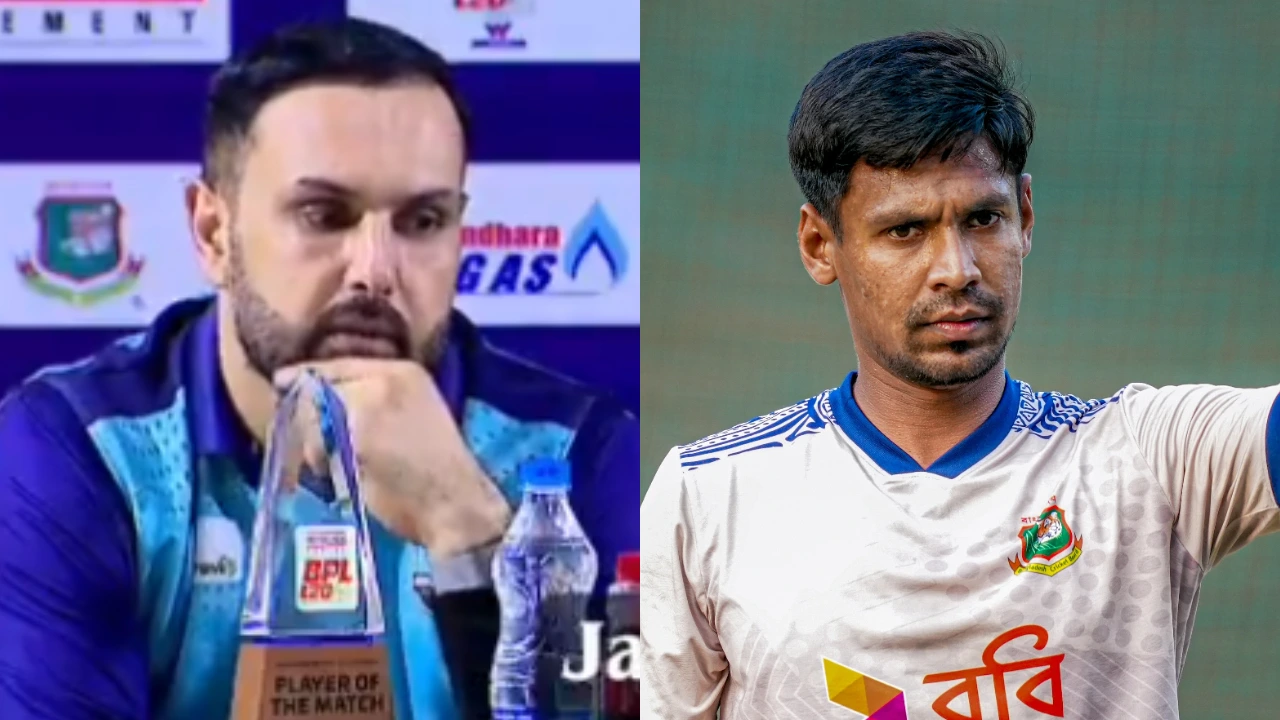
In a significant development amidst rising tensions between India and Bangladesh, Mohammad Nabi, the seasoned Afghan cricketer, has publicly distanced himself from his Bangladeshi counterpart, Mustafizur Rahman. This move comes at a time when diplomatic relations between the two nations are strained, particularly due to ongoing political and social issues. Nabi’s decision to separate himself from Rahman has sparked discussions in the cricketing community, as it highlights how external factors can influence personal relationships within sports.
The backdrop of this situation is marked by a series of events that have heightened animosities between India and Bangladesh. Political disagreements, as well as socio-economic challenges, have led to a climate of uncertainty and distrust. In this context, Nabi’s stance can be interpreted as a reflection of the larger sentiments that may permeate the sporting world. The camaraderie that typically exists among athletes from neighboring countries can be significantly affected when political tensions rise, leading to complicated dynamics on and off the field.
By choosing to publicly distance himself from Mustafizur Rahman, Nabi may be attempting to navigate the complex landscape of international relations, balancing his personal beliefs and professional commitments. This decision could be seen as a strategic move to maintain his own standing and reputation in the cricketing arena, especially given the current geopolitical climate. As sports often serve as a microcosm of broader societal issues, Nabi’s actions could resonate beyond cricket, illustrating how athletes must often confront challenges that extend beyond the game itself.
The implications of this rift could be profound, potentially affecting future collaborations between players from both nations and altering the way they interact during matches and tournaments. Fans and analysts alike will be watching closely to see how this situation unfolds and whether it leads to a broader conversation about the impact of politics on sports. Ultimately, Nabi’s decision not only underscores the interconnectedness of sports and international relations but also serves as a reminder of the personal and professional dilemmas faced by athletes in times of geopolitical strife.