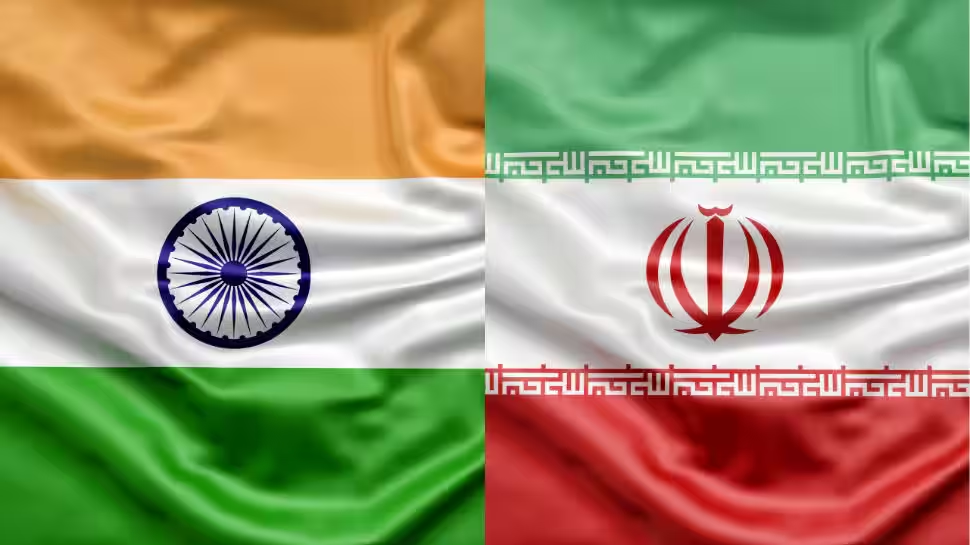
The relationship between India and Iran has historically been complex, influenced by various geopolitical factors and the contrasting ideologies of their leadership. Currently, the dynamics between India and Iran are shaped by the Pahlavi dynasty’s secular legacy and the Islamic Republic under Ayatollah Ali Khamenei. The Pahlavi era, characterized by modernization and secularism, fostered a more open and collaborative relationship with India. During this time, cultural exchanges flourished, and economic ties strengthened, laying a foundation for mutual respect and cooperation.
In contrast, the Islamic Republic established by Khamenei has shifted Iran’s foreign policy towards a more theocratic and ideological stance, emphasizing Islamic values and resistance against perceived Western imperialism. This shift has created challenges for India, which seeks to maintain its strategic interests in the region while navigating Iran’s changing political landscape. The current regime’s relationships with other countries, particularly those opposed to Western influence, have led India to carefully balance its ties with Iran while also strengthening its partnerships with nations like the United States and Israel.
Despite these challenges, India continues to engage with Iran, recognizing its importance as a regional player and a significant partner in energy and trade. The development of the Chabahar Port is a testament to India’s commitment to fostering economic ties with Iran, providing a crucial link to Afghanistan and Central Asia. However, India’s ability to rely on a secular Iran remains uncertain, as the ideological divide between the Pahlavi legacy and the current Islamic leadership complicates long-term strategic planning.
Ultimately, India’s engagement with Iran necessitates a nuanced understanding of the evolving political landscape. While the historical ties rooted in secularism offer a foundation for collaboration, the contemporary challenges posed by Khamenei’s regime require India to adopt a pragmatic approach. By focusing on shared interests and regional stability, India may still find avenues for cooperation with Iran, despite the prevailing ideological differences.