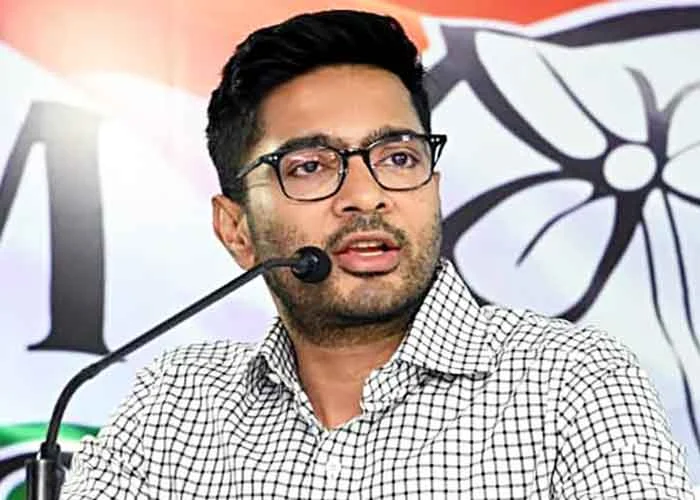
Abhishek Banerjee, a prominent leader of the Trinamool Congress (TMC), has publicly addressed the recent raids conducted by the Enforcement Directorate (ED) on the Indian Political Action Committee (I-PAC). These events have unfolded in the context of heightened tensions surrounding the party’s activities and the increasing scrutiny from law enforcement agencies. Banerjee’s remarks come on the heels of an incident where several TMC Members of Parliament (MPs) were detained by the Delhi Police during a protest, raising concerns about the political climate in India and the treatment of opposition parties.
In his statements, Banerjee accused the government of misusing central agencies to target political adversaries, a tactic he described as “weaponizing” these institutions. He emphasized that such actions are designed to intimidate and silence dissent, particularly against the backdrop of the TMC’s vocal opposition to the ruling party. Banerjee’s assertion highlights a broader concern among opposition leaders regarding the impartiality of agencies like the ED, which they claim are being manipulated for political gain rather than pursuing justice.
The raids on I-PAC, an organization involved in election management and strategy for various political parties, have been perceived as an attempt to disrupt the TMC’s operations and undermine its electoral prospects. Banerjee’s defense of the agency reflects a larger narrative of resistance against what he views as authoritarian overreach. By speaking out, he aims to rally support among his party members and constituents, asserting that the TMC will not be cowed by intimidation tactics. This situation underscores the ongoing struggle between the ruling establishment and opposition parties in India, as they navigate an increasingly polarized political landscape.
Moreover, Banerjee’s comments resonate with a wider audience concerned about the implications of such government actions on democracy and civil liberties. The detention of TMC MPs during their protest adds another layer to the narrative of suppression faced by opposition voices. As political tensions continue to escalate, the responses from leaders like Abhishek Banerjee will play a crucial role in shaping public perception and mobilizing support against what many see as an erosion of democratic norms in the country. The unfolding situation remains a critical focal point in Indian politics, highlighting the challenges faced by opposition parties amidst increasing governmental scrutiny.