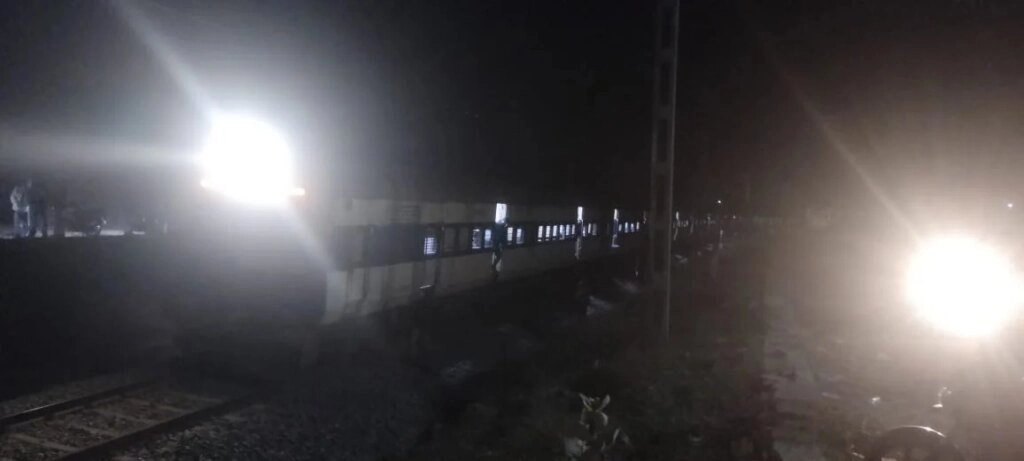
A tragic incident occurred when a lineman lost his life after being struck by a goods train. This unfortunate event has led to significant disruptions in railway services, as railway workers and affected families have demanded compensation for the loss. In response to the tragedy, protesters have blocked the railway line, which has resulted in a complete halt of train operations in the area. The blockade has particularly impacted several key train services, including the prestigious Rajdhani Express, causing delays and cancellations that have inconvenienced countless passengers.
The lineman’s death underscores the inherent risks faced by railway workers who are often tasked with maintaining and ensuring the safety of railway infrastructure. Such accidents highlight the urgent need for improved safety measures and protocols to protect those who work on the tracks. In light of this event, railway authorities are being called upon to review their safety standards and implement more stringent measures to prevent similar occurrences in the future.
As the situation unfolds, the demand for compensation has become a focal point for the protesting workers. They argue that adequate compensation is essential not only to support the family of the deceased but also to acknowledge the dangers that railway employees face daily. The ongoing protests and blockade serve as a reminder of the broader issues surrounding worker safety and compensation in the railway sector, prompting discussions on how to better protect those who are vital to the functioning of this critical transportation network. The impact of this tragedy will likely resonate within the community and the railway system for some time, as stakeholders seek solutions to prevent further loss of life and ensure the safety of railway workers.