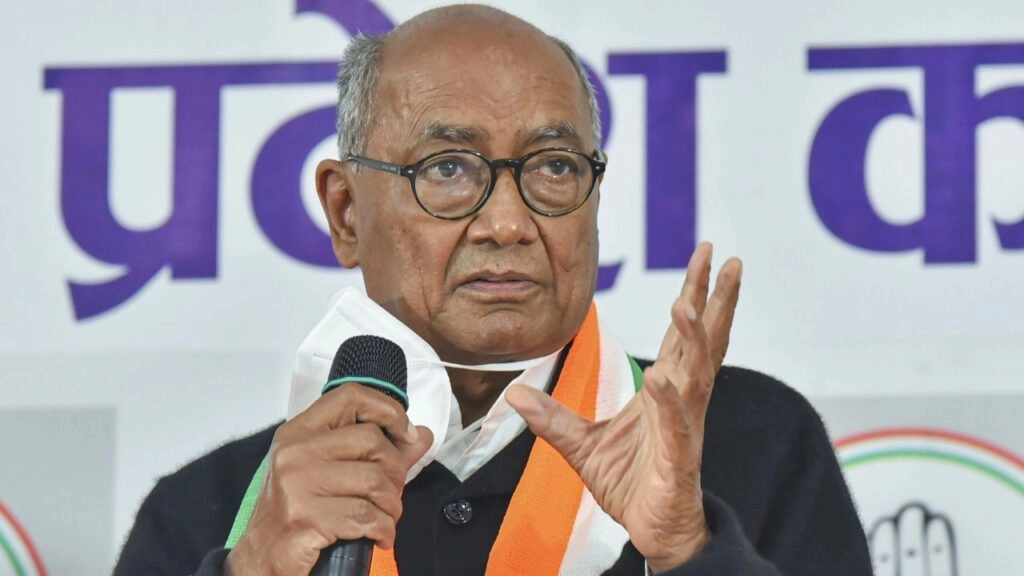
Digvijay Singh, a prominent Indian politician, has recently shifted his stance regarding the Rashtriya Swayamsevak Sangh (RSS), a right-wing Hindu nationalist organization. Initially, Singh expressed admiration for the RSS, recognizing its role in mobilizing communities and contributing to social causes. His earlier comments highlighted the organization’s capacity to unite people under a common cultural identity, which he believed could play a constructive role in society. However, this perspective has dramatically changed, leading him to label the RSS as anti-constitutional.
This transformation in Singh’s viewpoint reflects a broader political narrative in India, where the RSS has been both praised and criticized by various political figures depending on the changing political landscape. As tensions rise regarding issues of religious identity, secularism, and nationalism, Singh’s recent criticism suggests a concern over the RSS’s influence on the Indian political framework and its potential to undermine constitutional values. He argues that the organization promotes a singular view of Indian identity that may marginalize minority communities and contradict the pluralistic principles enshrined in the Indian Constitution.
Singh’s new stance has sparked a considerable debate among political analysts and commentators. Some see it as a necessary acknowledgment of the RSS’s growing power and its implications for democracy in India, while others view it as a tactical move to rally support from secular and progressive factions. The shifting perceptions of the RSS highlight the complexities of Indian politics, where the interplay between nationalism and constitutional democracy remains a contentious issue. As the political climate evolves, Singh’s remarks may resonate with many who are concerned about the trajectory of India’s secular framework and the need to uphold constitutional ideals in the face of rising ideological polarization.