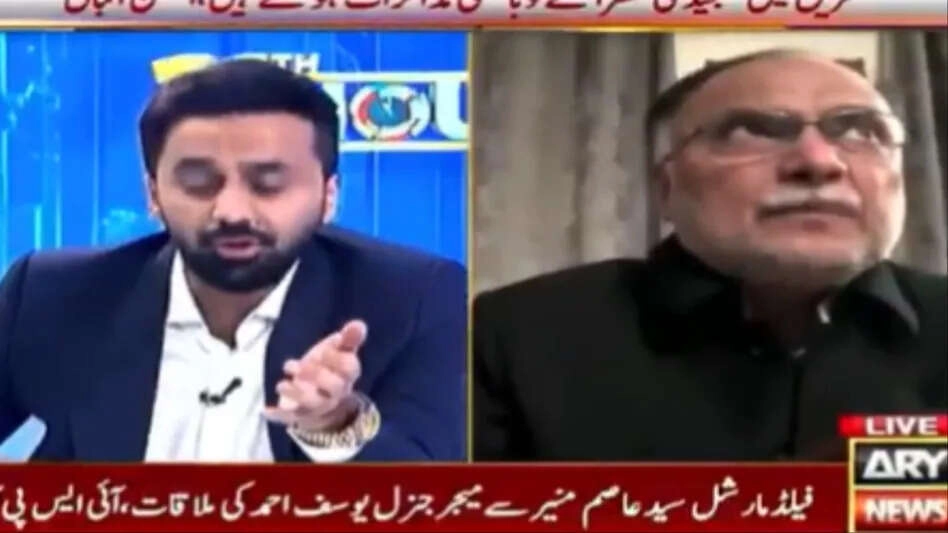
Recently, a dramatic incident unfolded on live television in Pakistan, drawing significant public attention and sparking discussions across various platforms. During a broadcast, a man unexpectedly shouted at a minister from Shahbaz Sharif’s government, creating a scene that quickly escalated into chaos. The confrontation raised eyebrows, not only because of the unexpected outburst but also due to the implications it has for political discourse in the country.
As the situation intensified, the minister and the show’s host attempted to calm the situation, but the tension in the studio was palpable. Viewers were left on the edge of their seats, witnessing firsthand how political tensions can spill over into public forums. The incident served as a reminder of the current political climate in Pakistan, where opinions can be deeply polarized, and emotions often run high.
In the aftermath of the incident, the minister took to social media and other platforms to clarify his stance and respond to the outburst. He emphasized the importance of respectful dialogue and the need for constructive criticism in political discussions. This response, however, did not quell the controversy; instead, it further fueled debates about the state of political communication in the country and the growing frustration among citizens.
Overall, this live television drama not only highlighted the volatility of political interactions in Pakistan but also underscored the challenges faced by public figures in navigating heated environments. As viewers reflect on the incident, it raises questions about the role of media in shaping political narratives and the responsibility of politicians to engage with the public in a meaningful and respectful manner. The incident may have been a moment of chaos, but it has opened the floor for important conversations about governance, accountability, and the nature of public discourse in Pakistan.