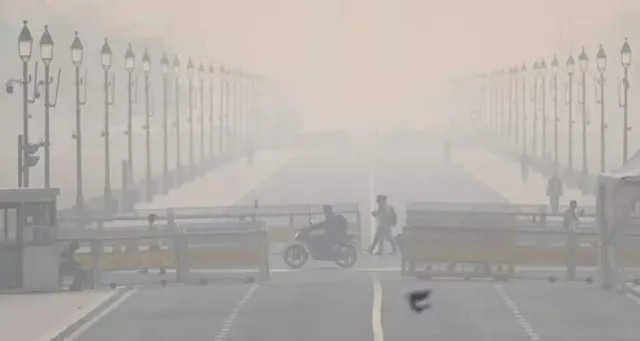
Toxic smog has tightened its grip on Delhi, raising significant concerns as air quality is expected to remain in the ‘severe’ category for the coming days. The city’s residents are already grappling with health issues linked to the hazardous air, which is exacerbated by factors such as vehicular emissions, industrial pollution, and the burning of agricultural waste in neighboring states. This persistent smog not only poses immediate health risks, particularly for vulnerable populations such as children and the elderly, but also contributes to long-term respiratory problems and other serious health conditions.
Authorities are urging residents to take precautionary measures, including staying indoors during peak pollution hours and using masks when venturing outside. The government is also ramping up efforts to combat air pollution by implementing stricter regulations on construction activities and vehicular emissions. However, these measures often face challenges due to the sheer scale of pollution sources and the rapid urbanization of the region.
As the weather conditions continue to favor the trapping of pollutants close to the ground, the situation is likely to worsen. The combination of stagnant air and low temperatures creates a perfect storm for smog formation, leading to visibility issues and further complicating transportation in and around the city. The government and environmental agencies are calling for immediate action to address not only the symptoms of air pollution but also its root causes, emphasizing the importance of sustainable practices and public awareness in tackling this pressing issue. The ongoing battle against air pollution in Delhi highlights the need for collaborative efforts among various stakeholders, including residents, policymakers, and environmental organizations, to create a healthier urban environment.