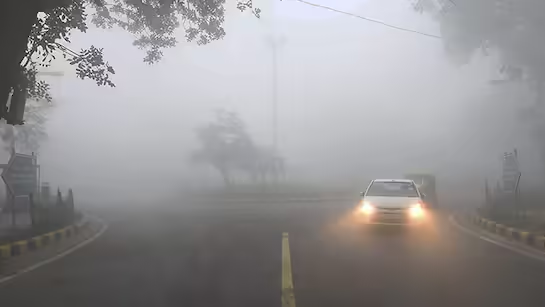
The increasing incidence of dense fog on highways has become a grave concern, casting a shadow of danger over travelers. Each year, as winter approaches, the visibility on roads significantly decreases due to thick fog, leading to a rise in accidents and fatalities. Despite the alarming statistics, government responses often seem limited to issuing advisories, which fail to address the underlying safety issues effectively.
Drivers frequently find themselves navigating through blinding fog, where visibility can drop to mere meters. This situation creates a perilous environment, particularly on high-speed highways where vehicles travel at high velocities. The lack of adequate measures to ensure road safety, such as improved lighting, warning systems, and regular maintenance of road conditions, exacerbates the risks associated with fog. While advisories can inform drivers of impending fog conditions, they do little to mitigate the dangers that come with it.
Moreover, the responsibility of ensuring safe travel cannot rest solely on the shoulders of motorists. Authorities must take proactive steps to enhance road safety during foggy conditions. This could include implementing better signage, installing fog detection systems, and increasing patrolling by traffic authorities during adverse weather conditions. Education and awareness campaigns could also play a vital role in preparing drivers for the challenges posed by dense fog.
In conclusion, while the issuance of advisories is a necessary step in alerting drivers, it is insufficient on its own. A comprehensive approach that combines public safety measures, infrastructure improvements, and driver education is essential to minimize the risks associated with fog on highways. The time has come for governments to move beyond mere advisories and take decisive action to protect lives on the road.