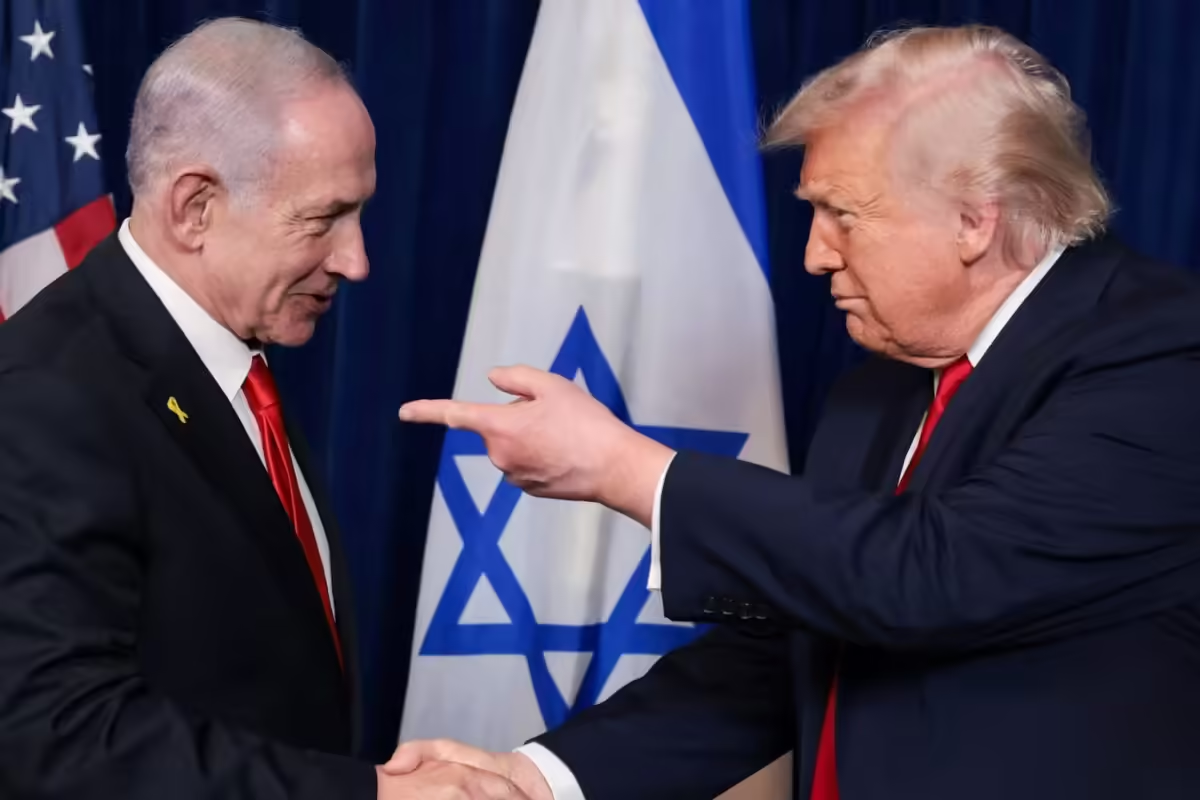
Recently, former U.S. President Donald Trump expressed his frustration towards India, accusing the country of engaging in unfair trade practices. His remarks came during a speech where he reiterated his stance on protecting American interests and highlighted concerns over what he termed as “cheating” by India in the realm of international trade. Trump’s comments underscored his administration’s focus on addressing trade imbalances and implementing tariffs on nations he perceived as undermining U.S. economic interests.
Trump’s threat to impose new tariffs on India reflects a broader strategy he employed during his presidency, aimed at renegotiating trade agreements to favor the United States. By labeling India’s practices as unfair, he signaled a willingness to take decisive action, which could potentially escalate trade tensions between the two nations. The implications of such tariffs could be significant, affecting various sectors, from agriculture to technology, and leading to a ripple effect on global trade dynamics.
This situation also highlights the ongoing complexities of U.S.-India relations, which have seen fluctuations over the years. While both countries have collaborated on various fronts, including defense and technology, trade disputes have often marred their interactions. Trump’s comments serve as a reminder of the delicate balance that both nations must navigate to maintain a mutually beneficial relationship while addressing their respective economic concerns. As the world watches closely, the potential for new tariffs could reshape the landscape of trade between the United States and India.