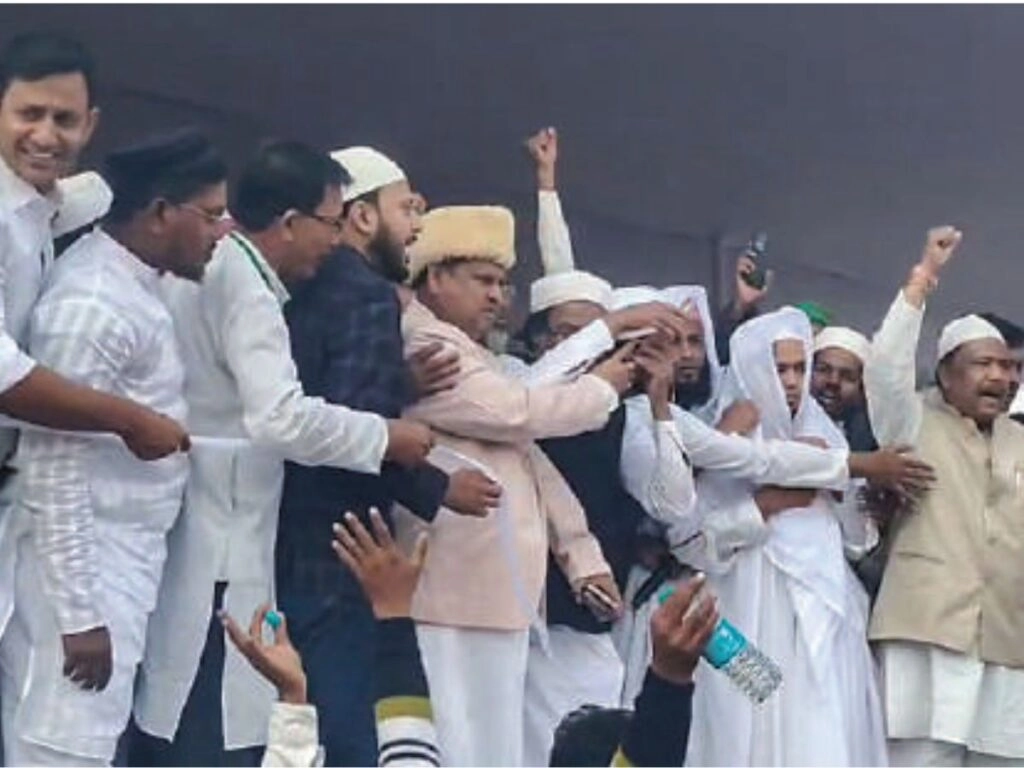
Humayun’s recent political maneuver, commonly referred to as the Babri move, has created a sense of unease for Mamata Banerjee as the election season approaches. This strategic shift has the potential to reshape the political landscape in West Bengal, a region where Mamata has held significant influence. The Babri move, which invokes historical and religious sentiments, could resonate with certain voter demographics, thereby posing a challenge for Mamata’s party, the Trinamool Congress (TMC).
As the Chief Minister of West Bengal, Mamata has been known for her secular and inclusive policies, but the emergence of this narrative may force her to recalibrate her campaign strategy. The Babri issue, deeply rooted in the socio-political fabric of India, could rally support for Humayun’s faction, creating a divide in voter sentiment. This situation is particularly precarious as it can polarize communities and potentially alter the voting outcomes in a state that has historically leaned towards the TMC.
In response, Mamata will likely need to emphasize her achievements and reaffirm her commitment to communal harmony to counter the appeal of the Babri narrative. Her party’s response will be crucial in maintaining its voter base, especially in light of the upcoming elections. Engaging with the electorate on issues of development, social justice, and unity will be essential for Mamata to secure her position and mitigate the impact of Humayun’s strategic move, which seeks to exploit existing tensions for political gain. The coming weeks will be critical as both political factions navigate this challenging terrain in the lead-up to the polls.