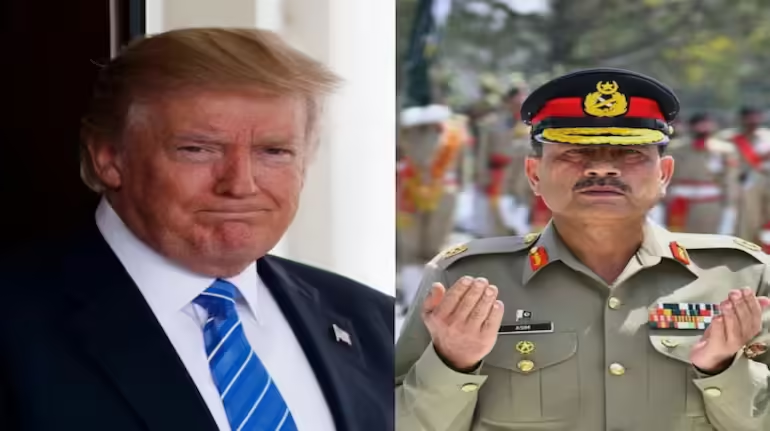
Recent statements from a Pentagon official calling for the United States to apologize to India and for the immediate arrest of Pakistani Army Chief Asim Munir have escalated global tensions. This unexpected demand has raised eyebrows not only in diplomatic circles but also among international observers who are closely monitoring the evolving dynamics between the two nations. The call for an apology stems from various geopolitical issues and historical grievances that have long existed between India and Pakistan, and the mention of Munir’s arrest adds another layer of complexity to the already fraught relationship.
The Pentagon’s official remarks come at a time when diplomatic relations in South Asia are particularly sensitive. The region has a long history of conflict, especially over Kashmir, and any statement perceived as taking sides can provoke strong reactions. The demand for an apology indicates a shift in how the U.S. may be perceiving its role in South Asian affairs, especially as it relates to its alliances and support for India. Asim Munir, who has been in the news for his military leadership amidst rising tensions with India, is viewed by some as a controversial figure. The call for his arrest could be interpreted as an attempt to hold Pakistan accountable for its actions, but it also risks inflaming existing hostilities.
Responses from both India and Pakistan to these demands will be crucial in determining the future trajectory of their relations and the broader geopolitical landscape. India’s government is likely to view the Pentagon’s call as a validation of its stance against Pakistan, while Pakistan may perceive it as an infringement on its sovereignty and an escalation of U.S. involvement in regional disputes. The international community will be watching closely, as any misstep could lead to further deterioration in relations, not just between India and Pakistan, but potentially involving other global powers as well.
As the situation unfolds, analysts suggest that diplomatic efforts will be essential to mitigate rising tensions and foster dialogue between the parties involved. The role of the U.S. as a mediator or influencer in this scenario is pivotal, and how it navigates this complex web of relationships will be closely scrutinized. The outcome of these demands could set a precedent for future U.S. engagements in South Asia, impacting not only bilateral relations but also regional stability as a whole.