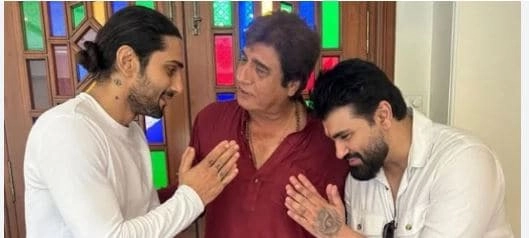
Aarya Babbar recently expressed his thoughts regarding his brother Prateik Babbar’s choice to drop their father’s surname, the late actor Raj Babbar. In an industry where lineage often plays a significant role in an actor’s identity, Aarya’s comments shed light on the complexities of familial connections and personal identity within the film world. He remarked, “Name change kar sakte ho, wajood nahi,” which translates to “You can change your name, but it does not change your existence.” This statement encapsulates the idea that while one can alter their public persona or branding, the essence of who they are, shaped by their upbringing and family heritage, remains unchanged.
Aarya’s remarks also hint at a deeper conversation about the pressures faced by actors in the entertainment industry, especially when it comes to legacy and familial expectations. Prateik’s decision to drop the surname could be seen as an attempt to carve out his own identity separate from that of his well-known father. However, Aarya’s perspective suggests that irrespective of the name one chooses to adopt, the roots and influences of family cannot be easily discarded. This dynamic illustrates the ongoing struggle many individuals face when trying to establish their individuality in a world that often emphasizes familial ties.
Moreover, Aarya’s comments reflect a broader societal discourse on identity, where names can signify heritage, history, and personal connections. The decision to retain or abandon a surname can be a powerful statement about one’s values and the legacy one wishes to uphold. In the context of Bollywood, where family lineage can affect career trajectories, Aarya’s acknowledgment of Prateik’s choices shows support while also prompting a reflection on the importance of understanding one’s origins. Ultimately, Aarya Babbar’s insights invite us to consider how names and identities are intertwined, and how they shape both personal and public narratives.